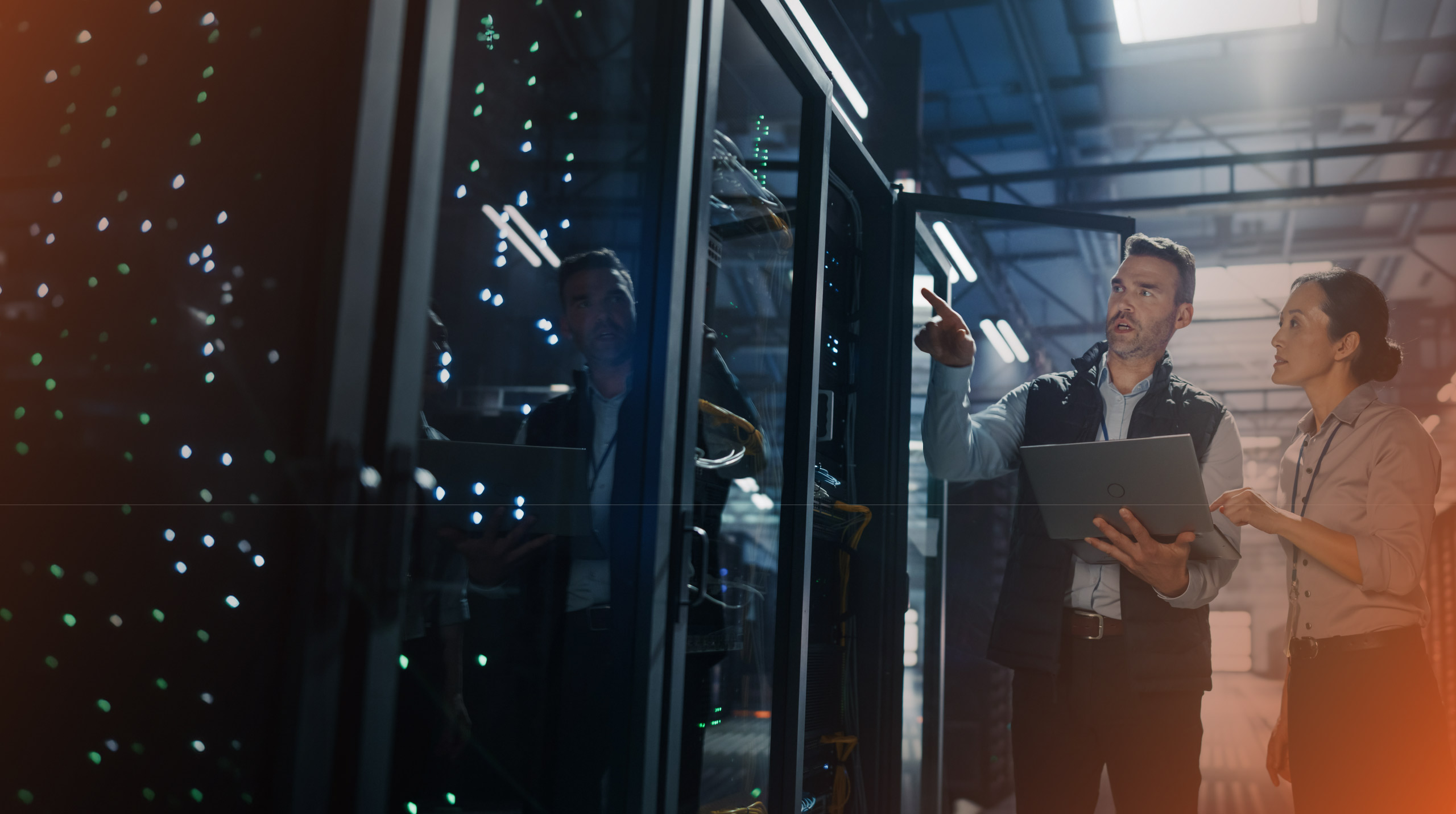
A few years ago, data center conversations were largely about efficiency, centered on better utilization, incremental automation or marginal cost savings. Today, the conversation has fundamentally changed.
Enterprise leaders are no longer asking how to modernize their data centers. They are asking a far more urgent question: what happens if we don’t?
AI workloads are driving unprecedented density and heat. Data volumes are growing faster than governance models can keep up. Application teams expect cloud-like speed, while finance teams demand cost predictability and risk control. And security leaders grapple with expanding attack surfaces across hybrid environments.
Clearly, the data center is no longer a back-office concern. It has becomea strategic control point that directly impacts agility, resilience, cost and competitive advantage.
This is where next-generation data centers enter the story.
Hidden Cost of Standing Still
Enterprises relying on traditional, hardware-centric data centers to run critical workloads may appear stable on the surface, but underneath, they are straining.
Manual provisioning slows innovation. Siloed infrastructure inflates operating costs. Inconsistent tooling across on‑premises and cloud environments increases operational risk. And as AI and data-intensive workloads proliferate, these environments become harder and more expensive to sustain.
The risk is not just technical debt. It is business drag:
- Slower time-to-market for digital initiatives
- Higher cost per workload
- Increased exposure to outages and security gaps
- Limited readiness for AI-driven growth
Modernization is no longer about chasing new technology. It is about removing friction from the business.
Reimagining the Data Center: From Fixed Assets to Flexible Platforms
Next-generation data centers flip the traditional model on its head.
Instead of tightly coupling compute, storage and networking to physical hardware, these data centers adopt a software-defined data center (SDDC) approach. By abstracting, pooling and governing resources through software, these data centers create an environment that behaves more like a cloud platform than a static facility.
This shift enables what business and IT leaders increasingly expect:
- Rapid provisioning instead of weeks-long waits
- Policy-driven operations instead of manual intervention
- Modular scaling instead of forklift upgrades
Technologies such as compute virtualization, software-defined networking (SDN) and software-defined storage (SDS), often delivered through hyperconverged infrastructure (HCI), form the foundation. Platforms like Nutanix unify these layers, enabling resilience and simplicity by design.
But technology alone is not the differentiator. How these platforms are designed, integrated and operated determines whether modernization delivers real business value or just a new kind of complexity.
Hybrid by Design, Not by Accident
Most enterprises are no longer debating whether to adopt hybrid or multi-cloud models. They already have. The real challenge is operating across on‑premises and public cloud environments without fragmenting governance, security and cost control. Next-generation data centers are built with hybrid operations as a first principle, not an afterthought.
A consistent operating model across environments allows organizations to:
- Place workloads where they make the most sense, based on performance, latency, risk or cost
- Scale capacity without over-provisioning
- Access cloud-native services, including analytics and AI, without rewriting operational playbooks
This is where cloud integration becomes a business enabler, not just an infrastructure decision.
Automation: Difference Between Modern and Future-Ready
Modern infrastructure without automation is simply faster chaos.
As environments grow more distributed and dynamic, manual operations become bottlenecks and risks. Next-generation data centers rely on automation-driven operations to maintain control at scale.
This evolution typically follows a maturity journey:
- Infrastructure as Code to standardize provisioning and configuration
- Orchestration to automate repeatable workflows such as scaling, patching and change execution
- AIOps to detect anomalies, predict issues and optimize resources proactively
Persistent brings a practitioner-guided, automation-led approach to this journey—combining ready-to-use automation assets, reusable templates and operational accelerators. Frameworks such as Persistent Intelligent Operations (PiOps) apply AI and ML to operations, helping enterprises move from reactive firefighting to predictive, intelligent operations.
The outcome is not just efficiency. It is operational confidence.
Security and Control in an AI-Driven World
As data centers evolve, security cannot be bolted on. It must be embedded.
Software-defined and hybrid architectures, when designed correctly, enable zero-trust-aligned controls, stronger segmentation and consistent policy enforcement across environments. They also support compliance requirements tied to data sovereignty and regulated workloads, an increasingly critical concern as AI expands data use.
In next-generation environments, security becomes a byproduct of good architecture, not a compensating control.
Where Persistent Makes the Difference
As vendors talk about SDDC, hybrid cloud or automation, Persistent focuses on making these capabilities work together in the real world.
Through a combination of consulting, modernization, consolidation and migration services, Persistent helps enterprises:
- Assess current-state environments and define outcome-driven target architectures
- Modernize infrastructure using software-defined controls and HCI
- Simplify and consolidate environments to improve utilization and resilience
- Migrate workloads using automation to reduce downtime and risk
Partnerships with platforms such as Nutanix are not just integrations; they are force multipliers. Our engineering depth, automation assets and operating-model expertise help organizations translate platform potential into measurable outcomes, including simplified operations, improved performance and reduced total cost of ownership.
Real Outcome: Data Centers as Business Enablers
Ultimately, next-generation data centers are not about infrastructure for its own sake. They are about enabling the business to move faster, operate smarter and scale with confidence.
Organizations that modernize successfully gain:
- Faster delivery of digital and AI initiatives
- Predictable, optimized infrastructure costs
- Improved resilience and operational reliability
- A foundation that evolves with the business not against it
Next Step: From Vision to Action
Modernization does not require a big-bang transformation. It requires clarity, prioritization and a roadmap.
The most effective starting point is a structured assessment to understand where the current environment creates friction, where automation can deliver immediate value and how hybrid operations should evolve over time.
From there, the path to a future-ready data center becomes not just achievable but inevitable.
Author’s Profile

Krishnan Vijayarangan
Sr. Practitioner, Cloud & Infrastructure

Inbarasan Kalaivanan
Principal Practitioner, Cloud & Infrastructure