
Introduction: The New Era of Workflow Transformation
Today’s businesses are under more pressure than ever to keep up with rapid change. The traditional approach to digital transformation, often slow, costly, and disruptive, simply doesn’t cut it anymore. Instead, organizations are turning to smarter, more agile strategies that deliver results quickly and efficiently. Two major drivers behind this shift are low-code platforms and the rise of Agentic AI.
The Evolution of Automation: From RPA to Agentic AI
Automation has always been about making work easier and more efficient. It began with Robotic Process Automation (RPA), which helped companies manage repetitive tasks at scale. Over time, automation matured through the integration of low-code/no-code platforms, intelligent document processing, and conversational interfaces. The introduction of generative AI accelerated this evolution, enabling systems to understand context and even generate new insights.
Now, we’re seeing the next leap: Agentic AI. This emerging capability brings together autonomous agents that can make decisions, learn from experience, and collaborate with people and bots. With Agentic AI, organizations can go beyond streamlining operations—they can unlock new ways of working, deliver meaningful business value, and create better experiences across the enterprise.
Low-Code: The Foundation for Rapid, Scalable Innovation
Low-code platforms like OutSystems have transformed significantly. What once served primarily for rapid prototyping has grown into a powerful engine for enterprise-scale transformation. By enabling both IT teams and business users to create and improve applications, low-code accelerates innovation and helps break down silos across the organization. With the addition of AI and Agentic capabilities, these platforms now help businesses adapt faster and scale transformation more effectively than ever.
OutSystems ONE 2025: A Glimpse into the Future
At OutSystems ONE 2025, leaders and experts from across industries gathered to explore the next chapter of workflow automation. Key themes included:
- Agentic Workbench Goes GA: OutSystems launched the general availability of Agentic Workbench, making it easier for organizations to build and manage autonomous agents.
- Lowering Barriers to Adoption: New initiatives—such as waived license fees and free proof-of-concept executions—are encouraging teams to experiment and innovate.
- Empowering Developers: Enhanced tools are making low-code development even more accessible, embedding AI deeper into business processes.
The event underscored a clear message: success with AI requires more than adopting new technology. It calls for thoughtful integration, strong governance, and a focus on tools that support, not replace, human expertise.
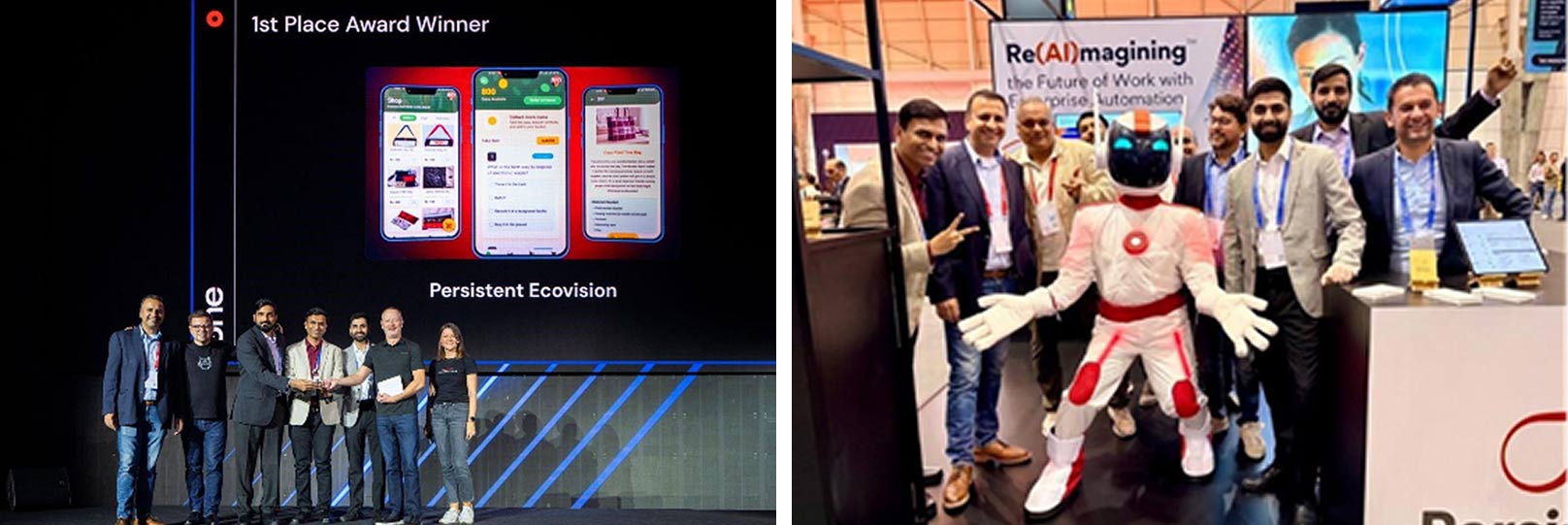
Persistent’s Role: Driving Enterprise-Grade Outcomes
Persistent is proud to partner with OutSystems to help organizations achieve real results with low-code and AI-powered solutions. Our continued recognition as OutSystems’ “Partner of the Year,” along with recent honors at OutSystems ONE 2025, reflects our commitment to driving innovation and delivering meaningful value for our clients.
Agentic AI is incredibly powerful, but in the enterprise, ‘autonomous’ cannot mean ‘uncontrolled.’ Our platform provides the essential layer of governance, security, and human-in-the-loop orchestration. We enable our customers and partners, like Persistent, to build AI agents that are not only intelligent but also auditable, scalable, and safely integrated into the very heart of their mission-critical applications.
Ben Yerushalmi, SVP, Partner Alliances, OutSystems
Conclusion: The Path Forward
As organizations explore the potential of Agentic AI, the focus is no longer if but how. The leaders of tomorrow will be those who approach these technologies with a clear strategy, a willingness to experiment, and an openness to new ways of working.
The next wave of workflow innovation is already underway. With Agentic AI and low-code, the opportunity to lead is well within reach.
Are you ready to take the next step? Connect with us