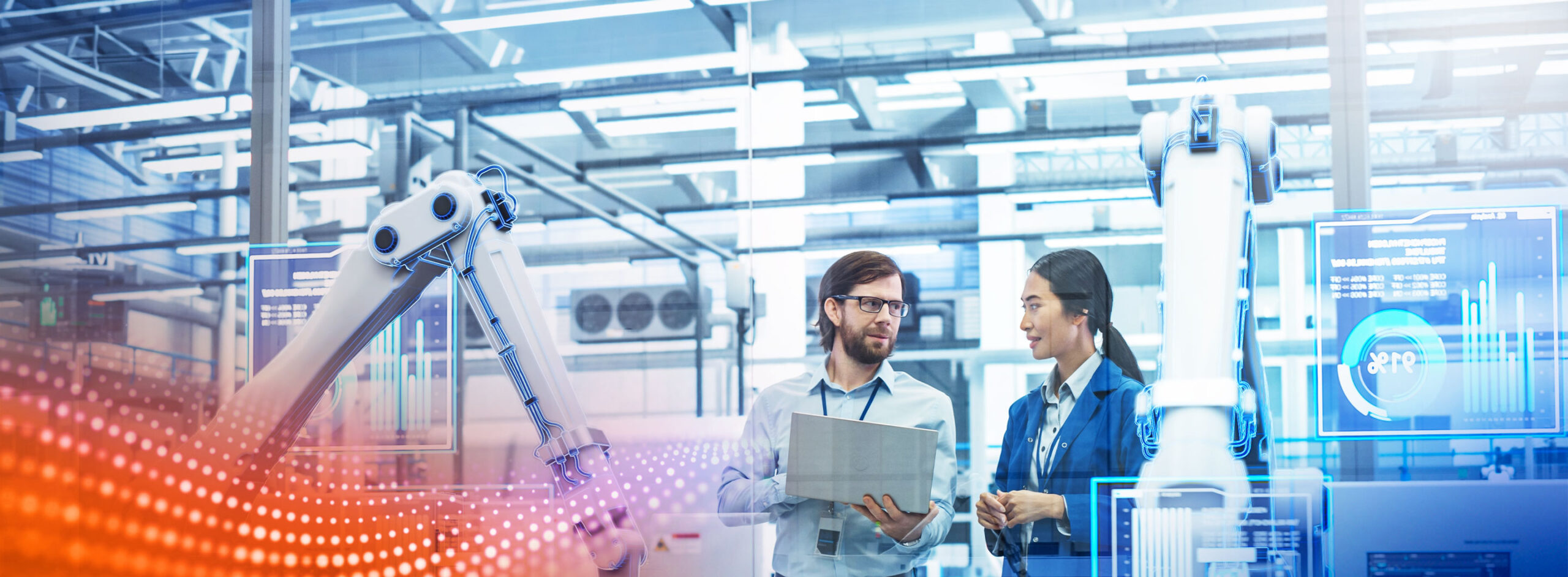
Across the industrial economy, automotive, industrial manufacturing, energy and utilities, the same pattern is emerging: AI ambition is accelerating, but enterprise readiness is not keeping pace. Industrial enterprises are moving fast to deploy copilots, predictive models, autonomous workflows, digital twins, intelligent maintenance, connected products and AI-led supply chain optimization.
Yet impact remains uneven as pilots struggle to scale across plants, assets, value chains, engineering functions and field operations.
The issue is that many industrial enterprises are trying to build intelligent, adaptive and autonomous businesses on top of fragmented legacy foundations that were never designed for real-time, scalable intelligence. This is why modernization determines whether AI remains a set of isolated experiments or becomes an enterprise value engine.
The Same Gap Playing Out Differently
Automotive: Connected Vehicles on a Fragmented Value Chain
Automotive companies are transforming around software-defined vehicles, connected mobility, electrification and autonomous systems. Yet legacy engineering platforms, data islands, disconnected ecosystems and complex supply chains limit AI’s enterprise-wide impact. In the absence of a modern digital core, AI remains siloed in individual functions instead of transforming the entire product-to-customer lifecycle.
Industrial Manufacturing: Digitized Plants with Siloed Intelligence
Manufacturers have digitized factories with automation, IoT, robotics and operational platforms, creating vast data opportunities for AI. Yet fragmented OT/IT environments, legacy systems and inconsistent data prevent AI from scaling beyond isolated pilots. The result is familiar: one plant proves the use case, but the enterprise struggles to replicate that intelligence across global operations.
Energy: Smart Assets with Scattered Operations
Energy companies manage complex, asset-intensive operations where AI can improve asset performance, grid reliability, forecasting, sustainability and operational resilience. However, legacy systems, fragmented data, disconnected workflows and aging infrastructure limit real-time, intelligence-driven decisions. Without modernization, AI cannot scale across assets, operations and the energy value chain to deliver enterprise-wide impact.
Utilities: Grid Intelligence Without Enterprise Integration
Utilities face growing demand, grid modernization, distributed energy and resilience challenges, creating significant opportunities for AI to optimize operations, assets and customer outcomes. But legacy utility systems and fragmented data silos limit real-time intelligence and autonomous decision-making. Without an integrated digital backbone, AI cannot connect grid, asset, customer and field intelligence to realize enterprise-wide value.
AI Is Outrunning the Industrial Core
Across automotive, industrial manufacturing, energy and utilities, three systemic constraints show up repeatedly.
1. Data Is Abundant but Not Operationally Usable
Industrial enterprises generate vast data across products, plants, assets, supply chains and operations, but much of it remains trapped in silos, legacy platforms and disconnected systems. Without unified, trusted and real-time data, AI delivers fragmented insights instead of scalable business outcomes.
2. Legacy Systems Limit Speed, Scale and Interoperability
Core industrial platforms — PLM, ERP, MES, SCADA, EAM and supply chain systems — were not built for continuous intelligence. They create friction across integration, automation and decision-making and raise barriers to operationalizing AI across critical business processes.
3. Workflows Remain Manual and Function-Led
In industrial enterprises, many workflows still cut across disconnected teams: engineering, operations, maintenance, quality, supply chain, field service, customer service and finance. Without workflow reinvention, AI only improves isolated tasks and does not transform how the enterprise senses, decides, acts and learns.
The result:
AI pilots succeed. Enterprise value stalls.
Why Now?
The pressure is visible in every industrial boardroom. Expectations are increasing and industrial leaders are asking why value is not scaling fast enough. AI is not another technology upgrade cycle. It is a structural shift in how industrial enterprises design products, run plants, manage assets, operate supply chains, serve customers and orchestrate ecosystems.
- In automotive, AI will shape software-defined products, engineering velocity, quality, service and mobility experiences.
- In manufacturing, AI will redefine productivity, resilience, safety, quality and autonomous operations.
- In energy, AI will become central to asset reliability, grid flexibility, decarbonization and trading intelligence.
- In utilities, AI will influence grid resilience, customer trust, outage response, field productivity and regulatory performance.
In this context, modernization is the missing link in enterprise AI. It is the reinvention of the industrial core that will make AI possible at scale.
Five Modernization Imperatives Define the Industrial AI Era
Data: From Fragmented to Unified
Industrial AI is only as powerful as the data foundation beneath it. Modernization unifies operational, engineering, supply chain and customer data to enable trusted, real-time intelligence that translates into decisions and execution outcomes.
Platforms: From Legacy to Composable
Enterprises are moving toward modular, API-drivenand composable architectures that span cloud and edge, turning AI into enterprise-wide intelligence and enabling faster innovation, greater resilience and scalable operations.
Workflows: From Automated to Autonomous
The real opportunity is to redesign industrial workflows for adaptive and autonomous operations: AI-led predictive intervention, dynamic scheduling, defect prevention, intelligent field service and workforce orchestration.
Infrastructure: From Operational to Strategic
Industrial AI cuts across factories, grids, vehicles, assets and field environments. It needs infrastructure that can process, learn and act from cloud to edge and serve as the strategic foundation for industrial intelligence.
Trust: From Governance to Differentiation
As AI enters mainstream industrial operations, trust becomes mission-critical, shifting from a compliance requirement to a competitive advantage because it affects production continuity, worker safety, grid stability, product quality and operations reliability.
The New Strategic Divide
The next phase of industrial competition will be defined by who can operationalize AI at scale and that will depend on who modernizes the core fastest and most effectively.
- Automotive companies will compete on software-defined, connected, intelligent mobility, not just vehicles.
- Manufacturers will compete on autonomous operations and resilient value chains, not just efficiency.
- Energy companies will compete on asset intelligence, sustainability and operational agility, not just production capacity.
- Utilities will compete on grid intelligence, reliability and customer trust, not just service delivery.
In every case, the defining question is:
Is the industrial enterprise core ready for AI or is AI exposing its limits?
The bottom line is clear.
AI is a force multiplier, not a silver bullet. On modern, integrated foundations, it compounds value; on fragmented legacy environments, it magnifies inefficiency and risk. Modernization is no longer just a precursor to AI; it is the key determinant of AI success.
The Way Forward
At Persistent, we look at enterprise modernization through an integrated lens of technology, business and experience. We believe the true value of AI in the industrial sector can be realized only when organizations renovate the core, reinvent the business and reimagine the experience together.
Renovate the Core: Build an AI-Ready Industrial Digital Foundation
Industrial organizations must move beyond fragmented systems and point solutions to build a connected, composable, AI-ready digital backbone, integrating enterprise, engineering, operational, asset and ecosystem data into a secure, scalable foundation for intelligent operations.
Reinvent the Business: Create Intelligent, Autonomous Operations
The next frontier is not automation in silos; it is the self-learning, adaptive industrial enterprise. Success requires intelligent workflows, predictive insights, digital twins, autonomous execution and closed-loop optimization across engineering, operations, assets, supply chains and field services.
Reimagine the Experience: Deliver AI-Native, Human-Centric Engagement
The goal is to deliver intelligent, personalized experiences that anticipate needs, simplify decisions, enhance productivity and build trust for employees, customers, partners and ecosystems across the value chain.
Persistent’s 3C Architecture
Our 3C Architecture — Core, Context and Coordination — is designed for purpose-built enterprise AI solutions that close the widening value gap between AI pilots and production-grade outcomes.
It helps industrial enterprises engineer AI solutions from the ground up and scale them systematically by ensuring the right foundations are in place across enterprise readiness, business awareness and operational execution.
- Core is the enterprise backbone and digital foundation for AI readiness.
- Context is the engine for enterprise intelligence that makes AI aware of business, operational, asset, product and customer realities.
- Coordination is the human-machine orchestration layer that makes AI operational across workflows, teams, systems and decisions.
Together, these three dimensions enable AI to move from experimentation to enterprise-scale value creation.
What Successful Industrial AI Leaders Do Differently
Based on our experience with industrial enterprises, three common traits distinguish organizations that successfully scale AI value.
- They build a connected data and technology foundation across engineering, operations, assets and supply chains.
- They embed AI into industrial workflows to create adaptive, predictive and increasingly autonomous operations.
- They deliver intelligent experiences that enable faster decisions for operators, engineers, partners and customers.
These organizations treat modernization as the operating foundation for AI-led transformation.
Conclusion
The industrial sector is at an AI-led inflection point. The winners will be those that modernize the fastest, connecting data, platforms, workflows and trust at scale. In the industrial AI era, value will be created not by AI ambition alone but from rebuilding the core to make AI real, scalable, measurable and outcome-driven.
Author Profile

Subhankar Ghosh
Vice President and Pre Sales Lead for Communications, Media, Technology and Industrial